
Week 4 Reflection
Week 4 – Sighting tohu
Current Project Status: Te Kitenga Phase (Sighting tohu to project forward)
Date: 11th August 2024
I will use the Gibbs Reflective Cycle framework (Gibbs, 1998) to structure my reflection this week.

[Figure 1: Gibbs Reflective Cycle – Gibbs, 1998]
Describe:
This week, I entered the Te Kitenga phase of the Hautu Waka process, where I sight tohu and move forward. I researched the ecosystem type that would have existed in the area before colonisation, and found a source (Singers & Rodgers 2014) that mapped areas of Auckland, and concluded that the ecosystem along Waipapa Stream would have been a mixture of wetland and forest types, varying depending on the exact topography and moisture levels along the course of the stream (Figure 2 below). I also explored the species found in broadleaf forests (WF7) and kohekohe forests (WF11), which can be seen in figure 3 below.

[Figure 2: Ecosystem Classifications in Auckland, Singers & Rodgers 2014 ]
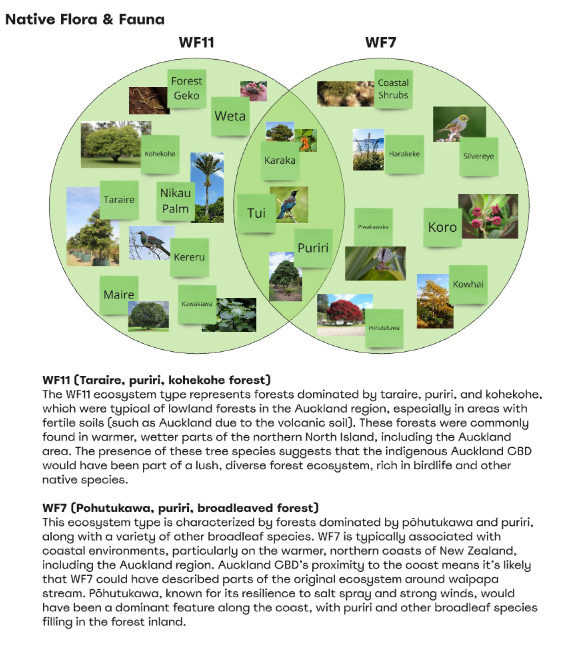
[Figure 3: Venn diagram of local historic biodiversity & Ecosystem type research, my Miro board]
I also researched more in depth the concepts I am exploring as part of this project: placemaking, codesign and renaturing learning. I did some sketches of what the space I am designing might look like, and the elements that might be included, taking inspiration from the species I had researched earlier (figure 4 below).
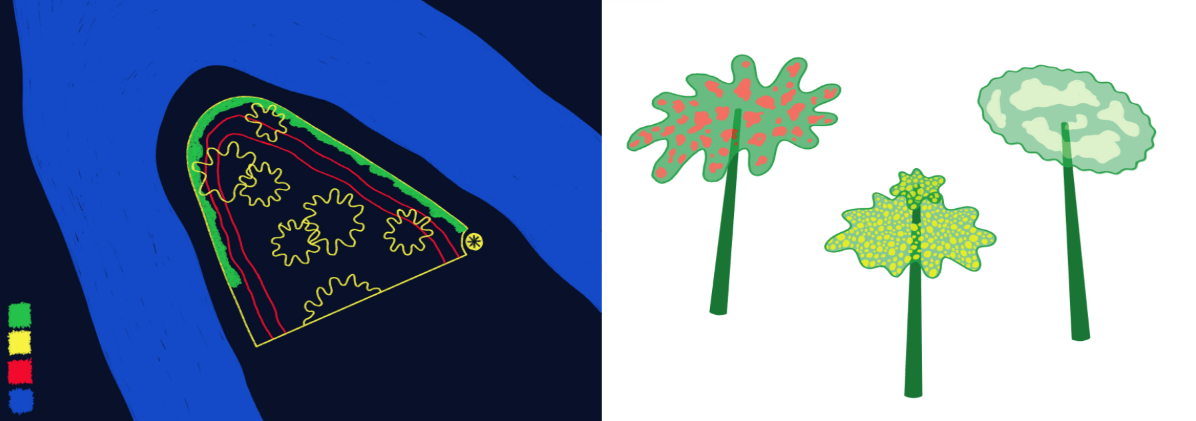
[Figure 4: Ideation of corner of Anzac Ave and Beach Rd space, my Miro board]
Feelings:
I was super inspired to get straight into some research. I went down a bt of a rabbit hole of information trying to classify the ecosystem type that would have existed along the stream path pre-colonisation. This was a topic that I felt really entranced by, and allowing myself to explore different leads helped me understand the bigger picture and had an overall positive effect on my process. During the feedback session in my tutorial, I felt unsure of my location selection, and discussion with my peers and tutor helped me confidently change course to a new spot.
Evaluation:
Researching the species and their ecosystems helped me see the connections and similarities between the types. This was valuable for determining which native flora and fauna should be referenced in the space I’m creating. However, after a feedback session, I realised that while the idea of a playground based on wetland ecosystems was fun, it didn’t fully address the key goals of reconnecting the local community with the Waipapa Stream and enhancing climate resilience.
Analysis:
Researching placemaking, codesign, and renaturing learning was crucial for defining the principles I want to explore in this project. The discoveries around renaturing learning were particularly exciting, as they sparked ideas for a space that encourages play and exploration in nature, reminiscent of when the Waipapa Stream flowed freely. Morse (2021) argued that the current approach to environmental education is inadequate for the social and ecological change required. They suggested that Structures designed by communities, for communities, considering the extraordinary complexities in place, tend to yield greater outcomes. This really resonated with me, and made me think about how important place-based design is for cultivating long term connections between people and spaces.
The tutorial feedback made me realise that my initial concept might not effectively achieve my project’s goals. This led me to reconsider the location and focus more on Parliament Reserve, a site that could better serve the community and project aims. The reserve is closer to the University of Auckland, making it a point of connection that would be really valuable and have high foot traffic. A walk around the area showed me that in its current state it is pretty barren, and lacking in anything fun that could connect the community to the river running beneath, so there are lots of opportunities to do better (figure 5 below).
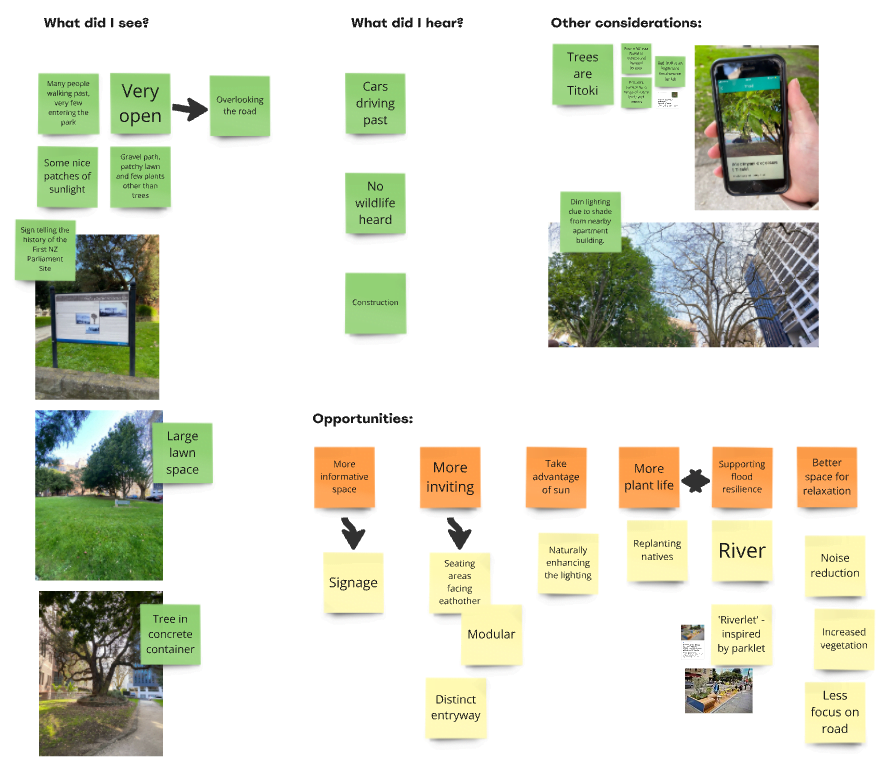
[Figure 5: Site Survey of Parliament Reserve, my Miro board]
Conclusion:
While my initial research and ideas were valuable, the feedback highlighted the need to pivot my focus. My original playground concept, while engaging, didn’t align well with my primary objectives to reconnect the local community with the Waipapa Stream, and also provide a space that is multifunctional and can help with Auckland CBDs climate resilience. Shifting my attention to Parliament Reserve offers a better opportunity to reconnect the community with the Waipapa Stream that runs beneath it, creating a space that supports climate resilience and learning.
Action Plan:
I will continue with the Te Kitenga phase of the Hautu Waka methodology, and identify more valuable insights that will help me design a critically considered final output. I will next take on the task of ideating the elements I want to include in the space. These elements were derived from the opportunities I analysed in the space, which include interactive signage, noise reduction mechanisms, inviting seating and increased vegetation. These insights will steer my design going forward and inform future decisions. I will continue to explore openly, maximising my creative flow and being open to new and innovative ideas.
References
Gibbs, G. (1988). Learning by doing: A guide to teaching and learning methods. Further Education Unit, Oxford Polytechnic.
Morse, M., Blenkinsop, S., & Jickling, B. (2021). Wilding educational policy: Hope for the future. Policy Futures in Education, 19(3), 262-268. https://doi.org/10.1177/14782103211006649
Singers, N.J.D.; Rogers, G.M. 2014: A classification of New Zealand’s terrestrial ecosystems. Science for Conservation 325. Department of Conservation, Wellington. p. 87.