
Looped States
In this assignment I undertook a process of creative interpretation and abstraction to reveal a novel insight about my chosen statistic. I expreimented with colour, form, and various other visual communication strategies to synthesize a dynamic output.
The goal of this assignment was to research into the contributing factors of the statistic, ad distill a narative for “why” the statistic is in its current state. The Processing animations were required to have an infinite or looped state, meaning there will be no percievable beginning or end to the animation.

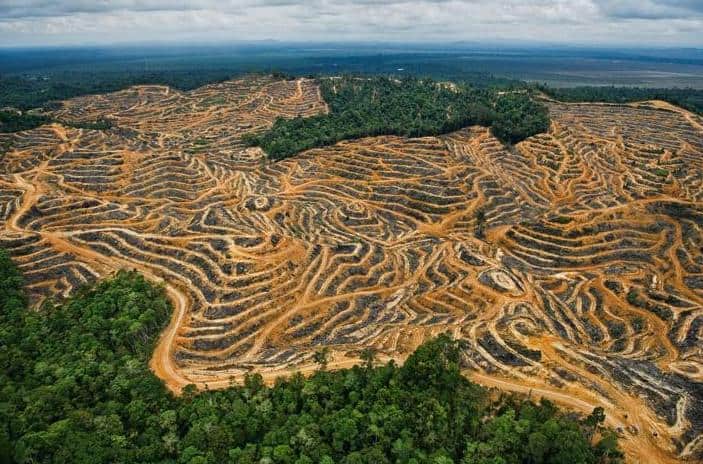
63% of New Zealands once richly diverse land area has been converted for human occupation and use.
The increasing population of New Zealand has led to increased land use, placing enormous pressure on biodiversity. By 2073 the projected number of consumers in Aotearoa is 6.8 million. This increase in consumers results in an increase in the demand on land for food, housing and other amenities. As the demand for land in Aotearoa increases, the necessity of properly utilising the land we already use is of utmost importance.
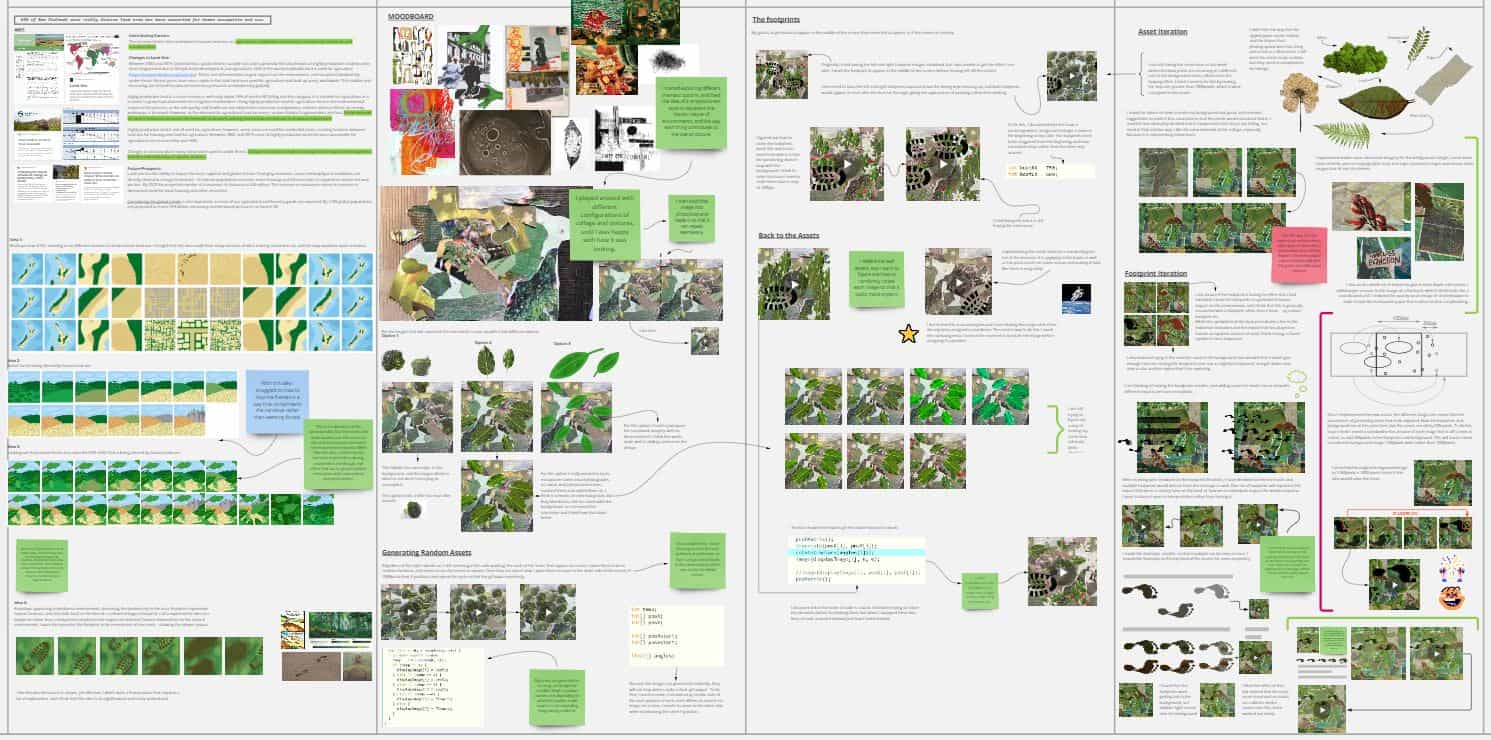
This final animation showcases the impact of human land use on the natural environment. The numerous collage pieces that make up the background represent the interconnected nature of our ecosystems, working together to complete one picture. The footsteps represent humans’ impact on the land through agricultural, residential, recreational, commercial, and industrial land use.
Increasing human land use results in habitat loss and a lack of species richness, which profoundly impacts the natural environment. The scrapbook ripping under the footsteps illustrates the deep, long-lasting effect humans have had and continue to have on Aotearoa.