
ITERATIVE DESIGN
Solar Technology
The design of solar technology has evolved substantially throughout history. They have have gotten more efficient and cost effective over time, largely due to the developments in the solar energy field, resulting in many iterations that have made the residential use of solar energy feasible.
Ideation 1 – First Solar Cells
The journey of solar panels began with the discovery of the photovoltaic effect, in 1839 by Alexandre-Edmond Becquerel, who noted in his findings that “the voltage of the cell increased when its silver plates were exposed to the sunlight.”
In 1873, Willoughby Smith, an engineer, discovered selenium’s capability to conduct electricity based on light intensity. Charles Fritts, an American inventor made the first solar cells from this material in 1882, sandwiching a thin layer of selenium between a metal plate and semi transparent gold leaf film, creating the first photoelectric module. While this device functioned at less than 1% efficiency, it was a major technological advancement that ultimately paved the way for the solar technology we see today.
Ideation 2 – The Beginning of the Solar Cell Era
Building off of this technology, the Bell Solar Battery was presented in 1954, using silicone in the solar cells, rather than the previously experimental selenium. This iteration made solar cells more efficient as silicon gives a greater electricity return than selenium, as well as being a more commercially viable material.
During this time, solar technology was still too expensive for the average consumer, costing $250 to produce just 1 watt of electricity, whereas, in a coal plant it would cost only 2-3 dollars. Although solar panels were not yet widely used within communities, the main use for them was in space travel. One example of which is the use of solar technology to backup the satellite Vanguard 1’s main power source in 1958 – the first satellite to use solar technology, operating at 10% efficiency.
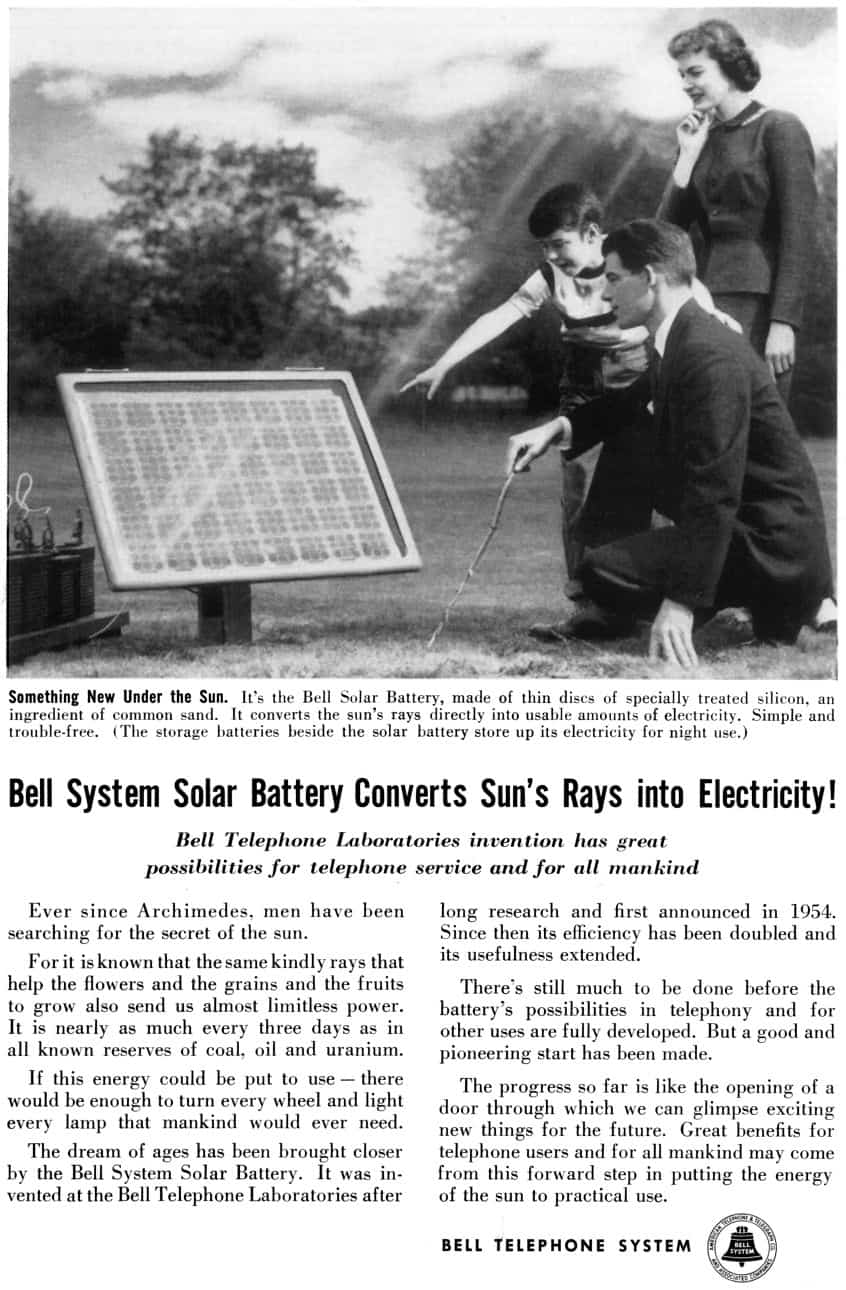
A Bell labs advertisement from 1954. Source: Bell Laboratories (1954).
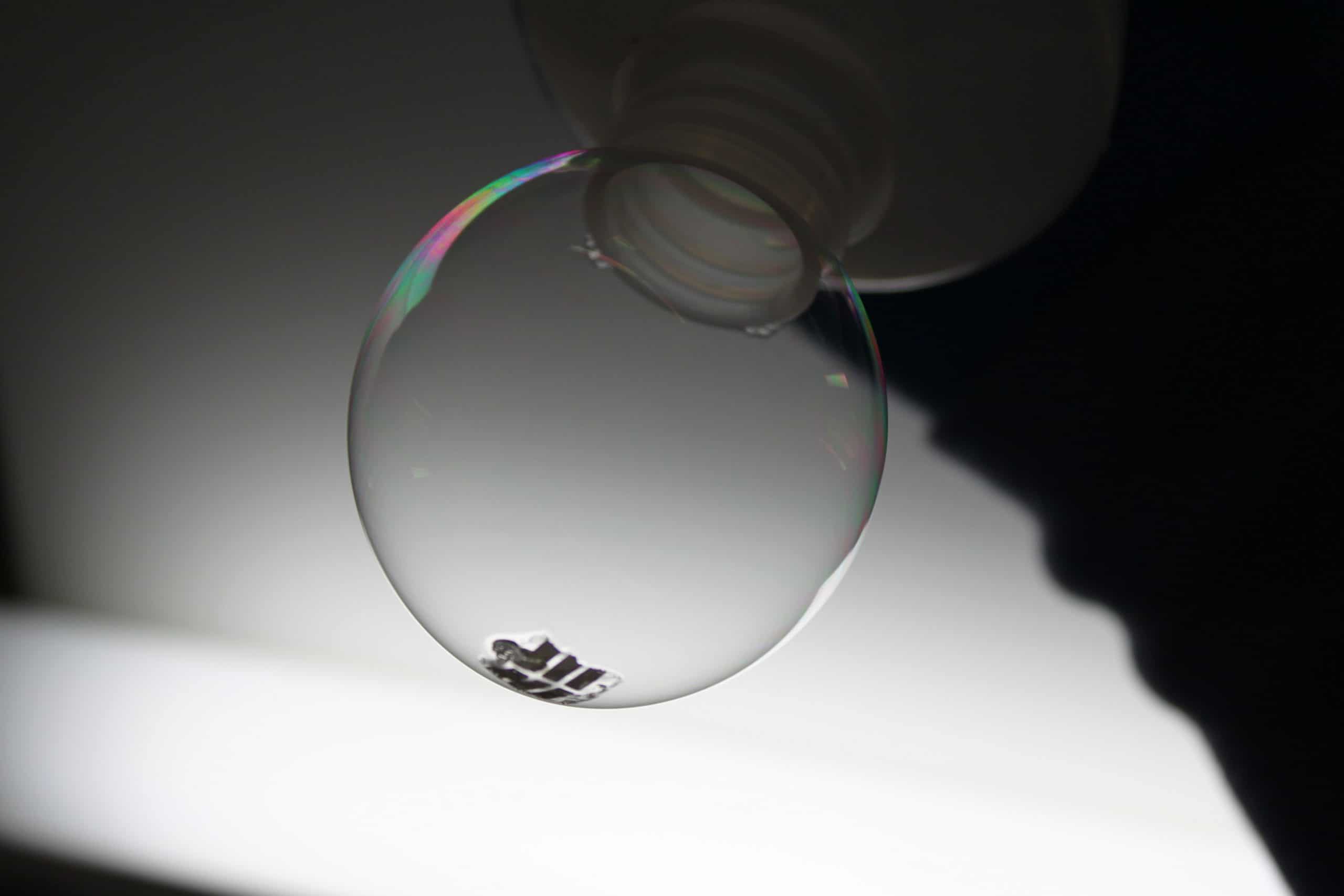
Solar cells as light as a soap bubble. Source: MIT News (2016)
Ideation 3 – Modern Models
In 2016, ultra-slim solar cells were produced by MIT researchers. These cells are extremely light and thin, as well as being able to produce 400 times as many watts per pound than conventional models. Recent steps forward in the field mean that solar energy is now cost competitive with conventional energy.
The Future of Solar Technology
In the future, I think solar cells will continue to advance, becoming a more universally used means of energy production, as well as overtaking conventional means of energy gathering in efficiency. With the record of solar cell efficiency currently at 47.1%, future iterations will only add to the efficiency, making solar technology more desirable to consumers. Functional and aesthetic advancements and iterations will continue, with solar paved roads, photovoltaic glass, solar fabric and solar shingles all in the works. Solar technology is a valuable resource for residential, commercial and industrial uses, and will no doubt continue to grow in efficiency and use.