Critical Commentary
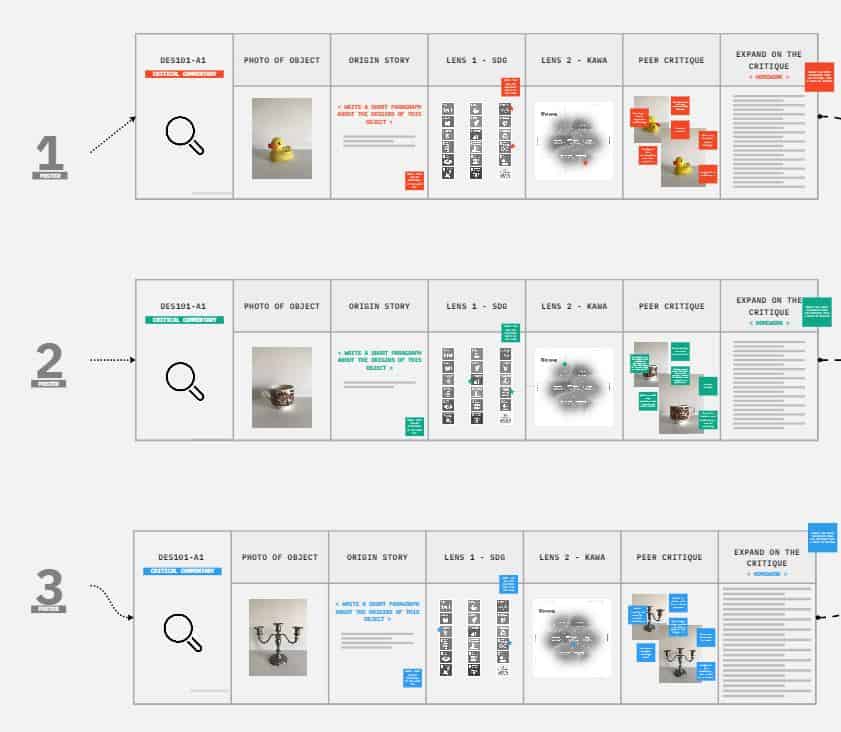
This assignment familiarised me with the idea of applying different critical lenses to design artefacts to assess their success from a variety of perspectives. Through this process I gained an understanding of design as a process that influences, and is influenced by, society. This allowed me to formulate personal positions towards design as a socio-technical phenomenon. I also developed an appreciation for the ethical considerations guiding design decisions, strengthened my communication skills, and developed a reflective attitude towards my design process.
Artefact 1
ORIGIN
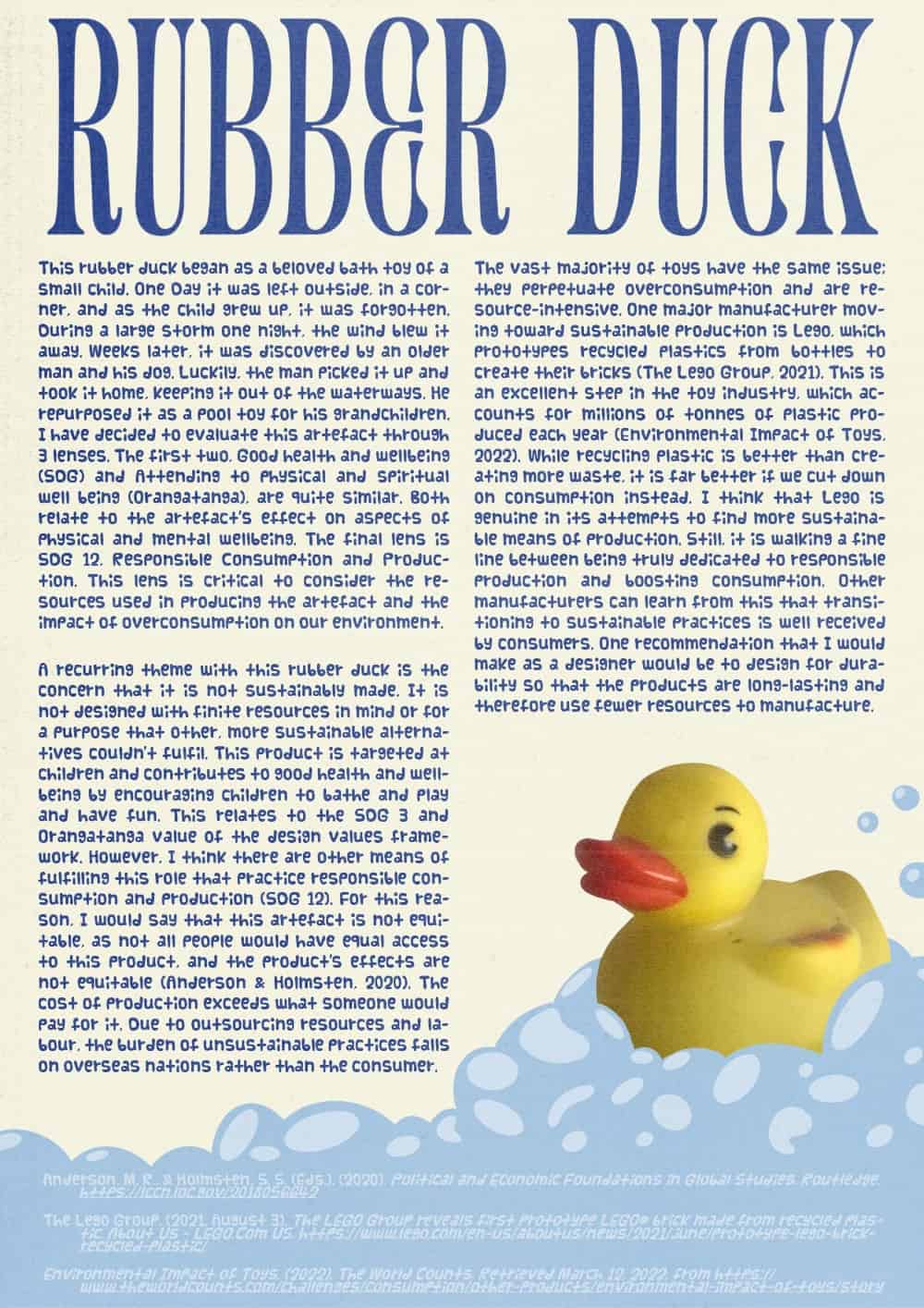
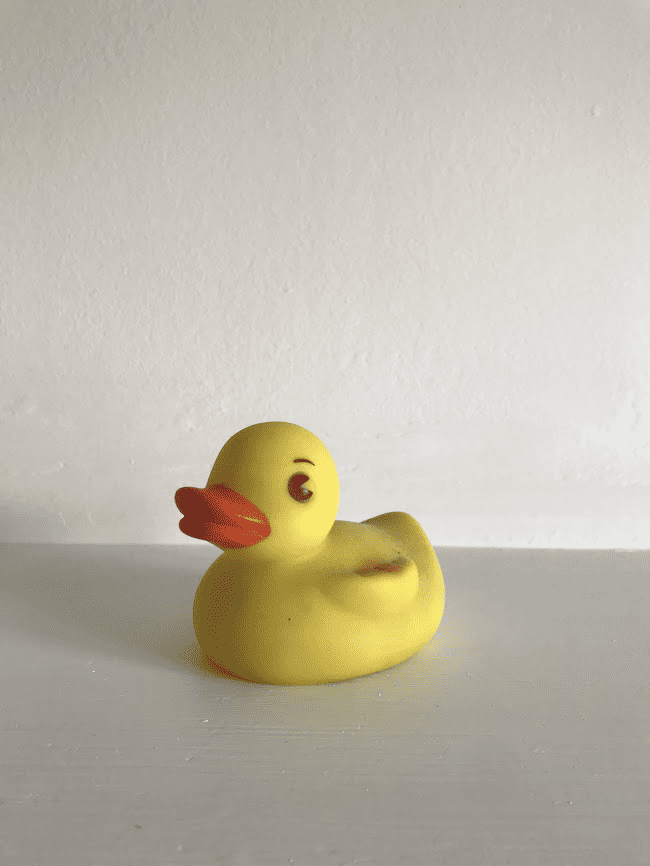
This rubber duck began as a beloved bath toy of a small child. One Day it was left outside, in a corner, and as the child grew up, it was forgotten. During a large storm one night, the wind blew it away. Weeks later, it was discovered by an older man and his dog. Luckily, the man picked it up and took it home, keeping it out of the waterways. He repurposed it as a pool toy for his grandchildren.
CRITIQUE
I have decided to evaluate this artefact through 3 lenses. The first two, Good health and wellbeing (SDG) and Attending to physical and spiritual well being (Orangatanga), are quite similar. Both relate to the artefact’s effect on aspects of physical and mental wellbeing. The final lens is SDG 12, Responsible Consumption and Production. This lens is critical to consider the resources used in producing the artefact and the impact of overconsumption on our environment.
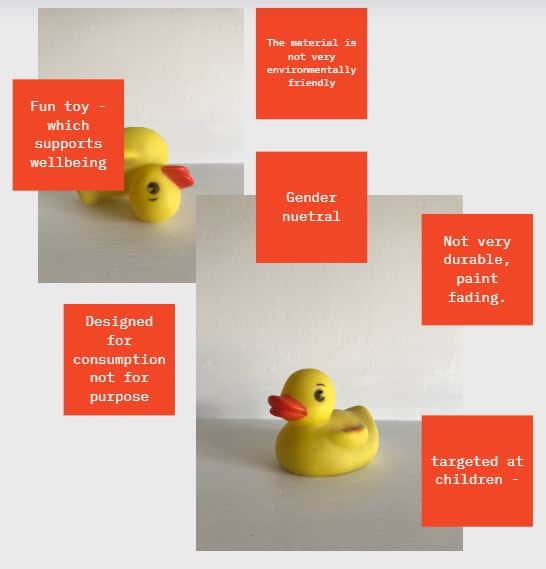

A recurring theme with this rubber duck is the concern that it is not sustainably made. It is not designed with finite resources in mind or for a purpose that other means couldn’t fulfil. This product is targeted at children and contributes to good health and wellbeing by encouraging children to bathe and play and have fun. This relates to the SDG 3 and Orangatanga value of the design values framework. However, I think there are other ways of fulfilling this role that practice responsible consumption and production (SDG 12).
For this reason, I would say that this artefact is not equitable. This is because not all people would have equal access to this product, and the product’s effects are not equitable. The cost of production exceeds what someone would pay for it. Due to outsourcing resources and labour, the burden of unsustainable practices falls on overseas nations rather than the consumer.
The vast majority of toys have the same issue; they perpetuate overconsumption and are resource-intensive. One major manufacturer moving toward sustainable production is Lego, which prototypes recycled plastics from bottles to create their bricks. This is an excellent step in the toy industry, accounting for millions of tonnes of plastic produced each year. While recycling plastic is better than creating more waste, it is far better if we cut down on consumption instead. I think that Lego is genuine in its attempts to find more sustainable means of production. Still, it is walking a fine line between being truly dedicated to responsible production and boosting consumption. Other manufacturers can learn from this that transitioning to sustainable practices is well received by consumers. One recommendation that I would make as a designer would be to design for durability so that the products are long-lasting and therefore use fewer resources to manufacture.
Artefact 2
ORIGIN
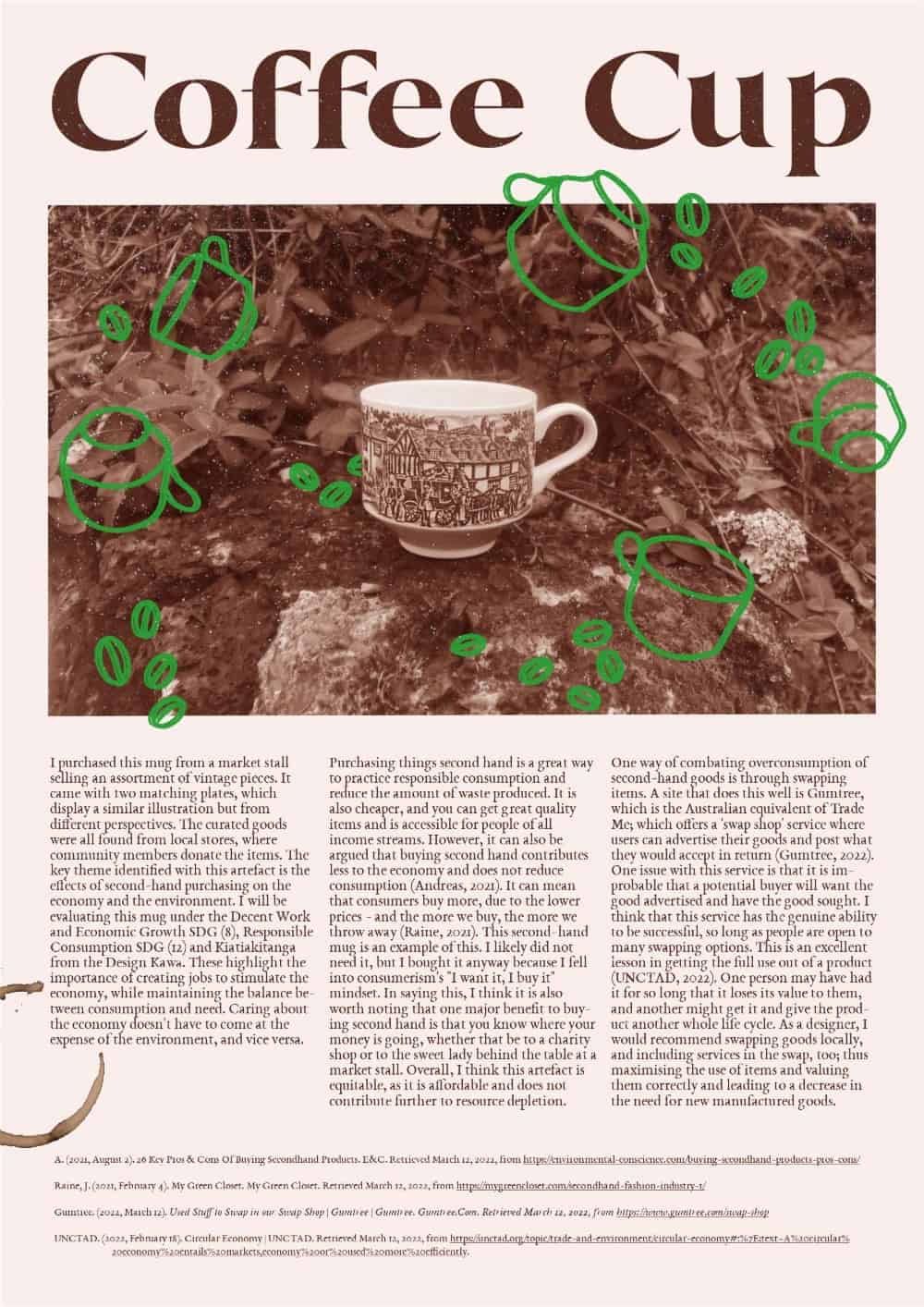
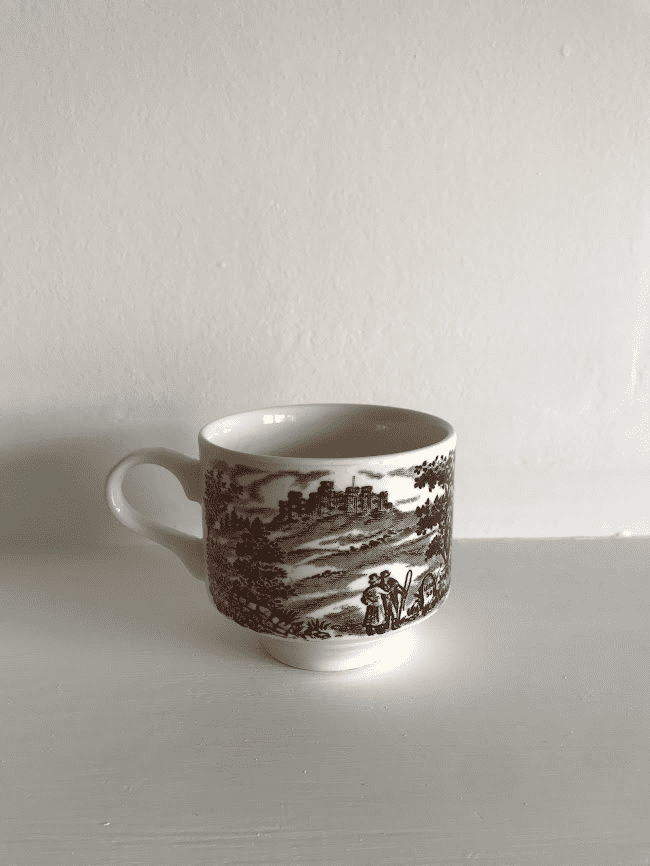
This mug was purchased from a market stall selling an assortment of vintage pieces. It came with two matching plates, which display a similar illustration but from different perspectives. The curated goods were all found from local stores, where the items are donated by members of the community.
CRITIQUE
Purchasing things second hand is a great way to practice responsible consumption and reduce the amount of waste produced. It is also cheaper, and you can get great quality items. However, it can also be argued that buying second hand contributes less to the economy and does not reduce consumption. It merely means that consumers buy more, and the more we buy, the more we throw away.
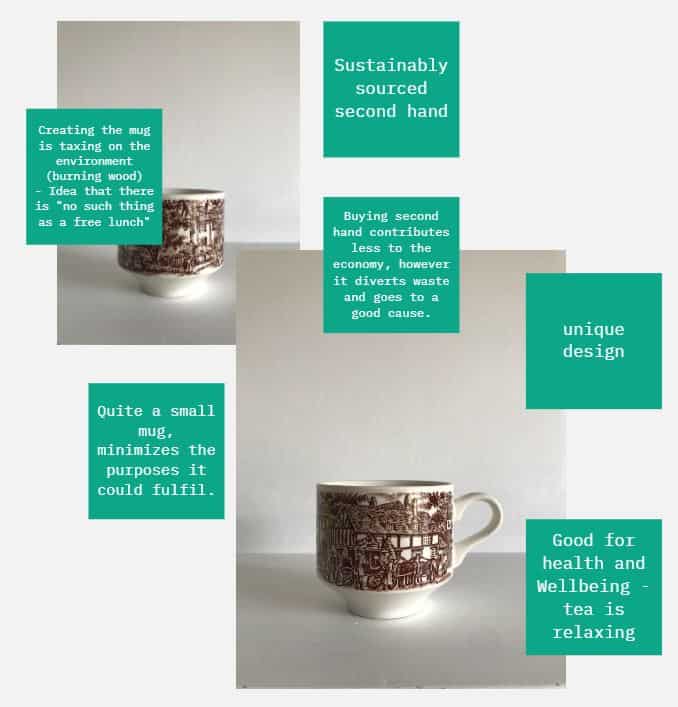
The key theme identified with this artefact is the effects of second-hand purchasing. I will be evaluating this mug under the Decent Work and Economic Growth SDG (8), Responsible Consumption SDG (12) and Kaitiakitanga from the Design Kawa.
This second-hand mug is an example of irresponsible consumption. I likely did not need it, but I bought it anyway because I fell into consumerism’s “I want it, I buy it” mindset. Overall, I think this artefact is equitable, as it is affordable and does not contribute further to resource depletion.
One way of combating overconsumption of second-hand goods is through swapping items. A site that does this well is GumTree, which is the Australian equivalent of TradeMe; however, it offers a ‘swap shop’ service where users can advertise their goods and post what they would accept in return. One issue with this service is that it is improbable that a potential buyer will want the good advertised and have the good sought. I think that this service has the genuine ability to be successful, so long as people are open to many swapping options.
This is an excellent lesson in getting the full use out of a product. One person may have had it for so long that it loses its value to them, and another might get it and give the product another whole life cycle.
As a designer, I would recommend swapping goods locally – and including services in the swap, too, thus maximising the use of items and valuing them correctly and leading to a decrease in the need for new manufactured goods.
Artefact 3

ORIGIN
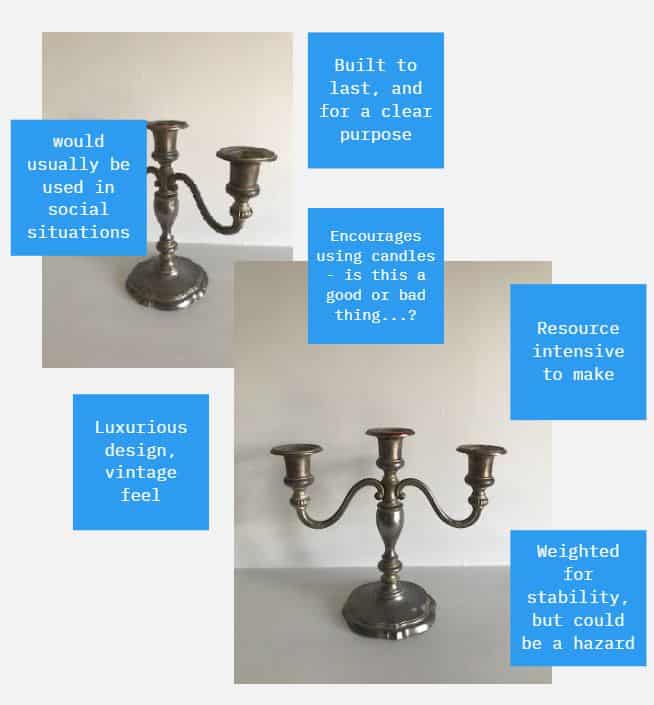
I found this candelabra on the dusty top shelf of an understaffed op shop. The cashier said that it was donated to them by a young couple who were clearing out the house of a loved one. Filled with old wax, the different colours tell of years of continuous use and inattention. Cleaning away the decades of waxy overflow, I envision its previous life on the mantlepiece of a manor house filled with light and life—one of many relics telling of years of passing down treasured belongings to the next generation.
CRITIQUE
The key issue identified with this artefact is the effectiveness of candles over electricity. Candles such as soy candles, paraffin candles, and palm oil candles all-cause indoor air pollution to some degree. Whether through emitting toxins, chemical fragrances, or being unsustainably sourced, they are less effective than electric means. Even when using sustainably sourced candles labelled organic or beeswax candles, they are still more expensive to burn than an LED bulb, both in monetary terms and for the environment. So, in providing affordable and clean energy or promoting responsible consumption, this candelabra certainly does not facilitate that.
I will be evaluating this artefact under two lenses: Affordable and clean energy (SDG 7) and Responsible consumption and production(SDG 12). Ensuring that a product supports affordable and clean energy, not only in production but also in its end state, is very important. Another key goal is ensuring that we are consuming responsibly.
The intended purpose of this artefact is a social piece, lit only on special occasions. Looking at this through the Whanau lens of the Design Kawa Framework, this artefact facilitates and encourages community, socialisation and wellness. I would not say that this product is equitable, as even when considered a decorative piece without candles, the resources used to create it and subsequent costs do not make it equally accessible.
LEDs have the lowest environmental impact of different light sources; however, this is not to say that they are perfect. They last for over ten years, are more energy-efficient than other sources and are non-toxic. This is great because less is more regarding manufacturing and responsible resource consumption. They also come as LED candles, which is great for aesthetic purposes. They are also far brighter than candles and do not pose air pollution and fire hazards.
This is an excellent lesson in quality over quantity. The less of something that is needed, the less manufacturing, resources, and shipping required. When a circular design process has yet to be implemented in this area, buying and using less is best.
As a designer, I would recommend thinking about designing for sustainability. The fundamental principles of this structure are Efficient Design, Safe Design, Cyclic Design, and Communications Design. Considering what will happen to the product at the end of its use is key to the cyclic design and maximising resources.
POSTER INTEGRATION