
DISCOVERY PHASE
COMING UP WITH A PROBLEM THAT 100 UNIVERSITY STUDENTS HAVE FOR #DES100

Initial Problem Finding
We started with the initial problem finding, brainstorming a problem that 100 university students share. We had lots of options from this, but we all agreed that the lack of composting in the university was something we’d like to work on.
The Strategy
We decided to go for a divide and conquer approach and divided up the writing to do before we met next. I wrote some questions we might like to ask for the survey, then once the survey had been made, I sent it out to be filled in.
Why we chose this problem
The lack of recycling bins around the university is an issue that over 100 students have to deal daily. Composting food waste helps to reduce landfill usage. When organic waste ends up in landfills, it generates methane, which is a potent greenhouse gas1. Currently, the University of Auckland has no compost bins, forcing all students to put their organic waste into the general bins, contributing further to greenhouse gas emissions2. As well as diverting waste being placed unnecessarily into landfill, it is great for plants, lawns and gardens as it improves soil quality and reduces the need for chemical fertilisers3. It is an easy and manageable way to make a substantial difference in the environment4.
Observation/Photo Journal
What is it?
Compost bins are a widely used system, which separates organic waste and diverts it from landfills. It’s a simple process of organising waste while we throw it away. With the increasing awareness of the importance of more sustainable methods, composting is becoming more common. An issue with adding compost bins could be the smell. Decaying fruits and vegetables would have to be contained or removed regularly to avoid deterring people from using the bins. This would also minimise opportunities for rodents and other wildlife to find their way into the bins5.

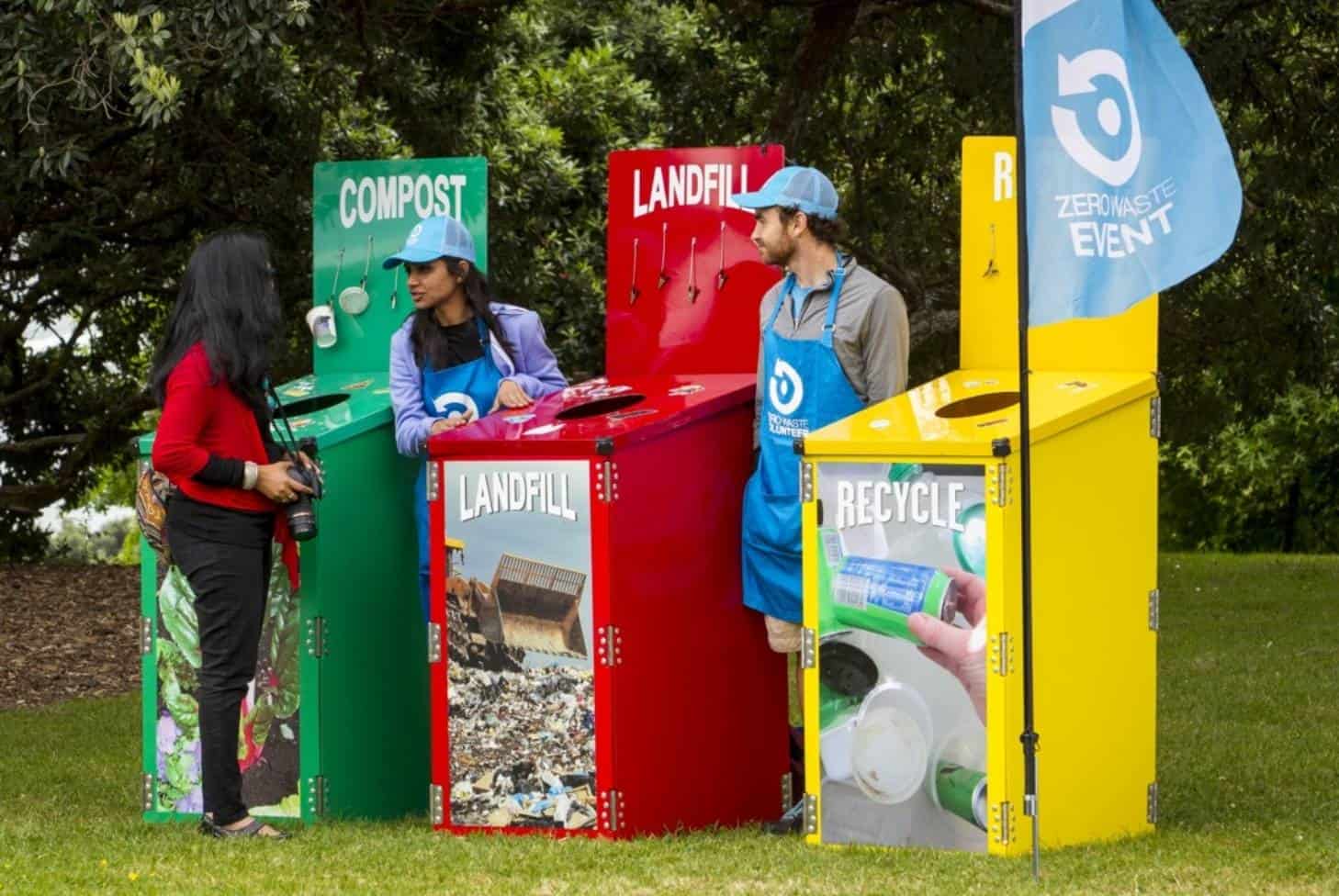

6,7,8.
Why is it useful?
Composting is useful for various reasons, most importantly because it:
- Decreases landfill waste
- Reduces the need for chemical fertilizers
- Decreases the amount of methane produced
A study found that 229,022 tonnes of food is sent to landfill each year only from households and approximately 50% of it is all avoidable food waste9. If we make composting accessible in the university, this will be a step to decreasing this number.
How can I do it?

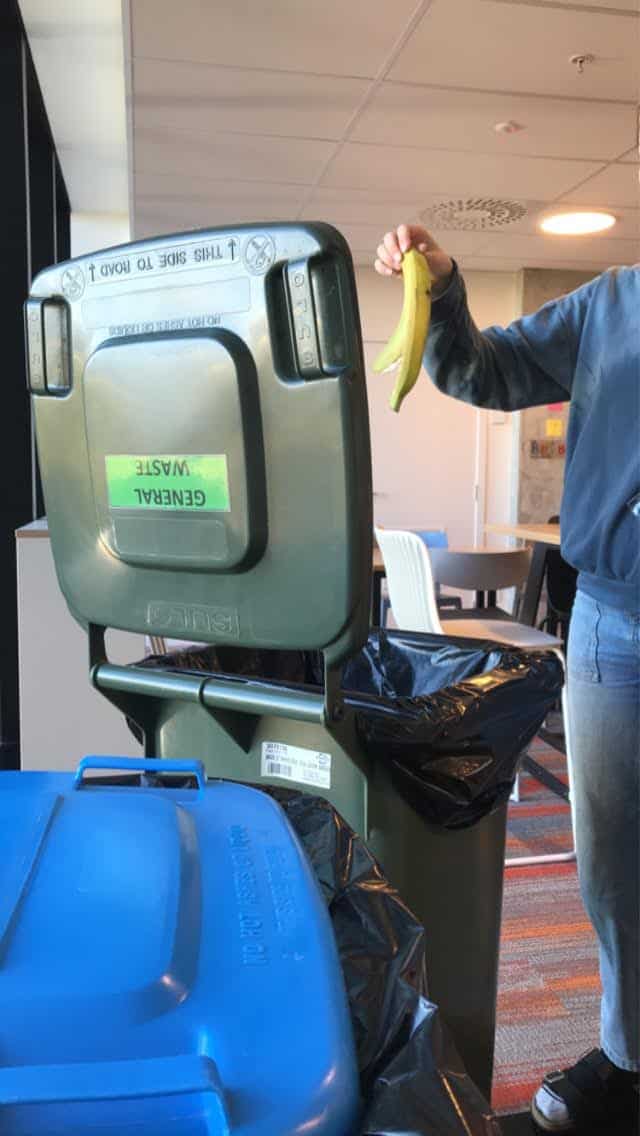
The facial expression is unmoved, showing that the person is unbothered by throwing out the banana peel. We don’t always consider the repercussions of our actions, or environmental footprint, especially when we are in a hurry. It has been normalised to lump organic waste in with the others, as not sorting waste is easier and more time-efficient, in our society which values time. We need to change this.
Initial Problem Analysis – 5 Whys
- Why is composting a problem within the university environment?
Because it is currently not implemented, so we are contributing unnecessarily to the landfill waste. - Why isn’t it implemented?
It isn’t seen as a pressing or urgent matter, so hasn’t been given priority and has not received funding. - Why is it not seen as a pressing matter?
Because there are other issues that are more visual or have been lobbied for louder. Since it’s not seen as a significant demanding issue, it can be pushed to the background. - Why have other issues been addressed and not this one?
Because there hasn’t been sufficient push from the people to implement it. Without student voices asking for this change, it will continue to be seen as an unnecessary cost. - Why would it be seen as an unnecessary cost?
Because there is a risk that people wouldn’t use it correctly, or even at all, so it could be considered a gamble to implement.
Discovery Phase Summary
10 Observations:
- Students have nowhere to dispose of their compostable waste.
- Students are unaware of their contribution to the landfill.
- Composting would reduce the university’s environmental footprint.
- Composting would decrease the amount of greenhouse gasses emitted.
- Composting takes initiative to implement into people’s daily routines.
- Students often put their organic waste into landfill at university.
- The general public needs guidance as to what can and cannot be composted.
- It has become normalised within university culture to value time over the environment.
- People don’t feel confident about what can and cannot be composted.
- Students often compost within their own homes.
5 Insights:
- Students are busy and not aware of the consequences of not composting.
- Students are unaware of the alternatives and so have often not considered taking food scraps home to compost.
- Composting is an addition to the university’s waste management system that adds an extra cost.
- It is more common for people to compost within their own homes rather than in public due to extra costs, time and money.
- People will compost if given the opportunity but won’t go out of their way to do so.
Empathy Conversations
I also did some research on empathy interviews and wrote out the questions and some notes for my group when they wanted to do their interview. Initially, we were each going to conduct one empathy conversation, but when I asked for someone from my floor to be in the video, lots of people were keen to give their opinions, so I ended up doing 3. I think this worked out well since it’s always better to have many insights and thoughts to draw ideas from. I found the actual empathy conversation difficult, as I tried to make people feel comfortable while asking continuous questions.